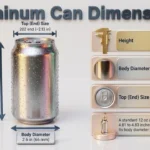
The standard 12 oz beer can stands 4.83 inches (12.2 cm) tall. Its diameter is 2.60 inches (6.6 cm).
Beer cans range from 8 oz Pony cans to 32 oz Crowlers. This guide covers the size chart, the volume of each can, and the exact Beer Can Dimensions of every format.
Beer Can Sizes and Names
The 12 oz can dominates US retail. The 16 oz Tallboy is the craft beer standard. The 19.2 oz Stovepipe owns convenience store single-serve.
Pony / Nip
Diameter: 2.08 in / 53 mm
Volume: 237 mL
Standard Can
Diameter: 2.60 in / 66 mm
Volume: 355 mL
Tallboy / Pint
Diameter: 2.60 in / 66 mm
Volume: 473 mL
Stovepipe
Diameter: 2.60 in / 66 mm
Volume: 568 mL
King Can / Silo
Diameter: ~2.8–3.0 in / 71–76 mm
Volume: 710 mL
Crowler
Diameter: 2.86–3.0 in / 73–76 mm
Volume: 946 mL
Euro Can
Diameter: 2.60 in / 66 mm
Volume: 330 mL
Standard 12 oz Beer Can Dimensions
The 12 oz can is the baseline for the entire US beer industry. Every major brewery — Budweiser, Coors, Miller, Modelo — uses this size as their primary format.
The 202 end refers to the lid diameter specification — a standard used across the aluminum can industry. The lid is smaller than the body diameter, giving the can its recognizable tapered neck at the top and bottom.
The 12 oz can body diameter (2.60 inches) is the same as the 16 oz Tallboy. Both cans use identical body tooling — only the height changes. This is why they stack and ship the same way.
16 oz Tallboy (Pint) Can Dimensions
The 16 oz Tallboy became the craft beer industry’s default single-serve format through the 2010s. Sierra Nevada, Dogfish Head, Stone Brewing, and thousands of independent craft breweries use it as their primary package.
At 6.19 inches tall, the Tallboy is exactly 1.36 inches taller than a standard 12 oz can — but the same width. Two 16 oz cans side by side take up the same shelf footprint as two 12 oz cans.
19.2 oz Stovepipe Can Dimensions
The 19.2 oz Stovepipe is the single-serve stadium and convenience store standard. You’ll find it at sports arenas, music venues, gas stations, and grocery store single-serve coolers.
Why 19.2 oz? It’s exactly one imperial pint (568 mL) — the traditional British pint measurement. This makes it the go-to size for UK-style pub beer served in cans, and a premium single-serve price point in US retail.
24 oz King Can / Silo Dimensions
The 24 oz can uses a wider body than the 12/16/19.2 oz family. It’s the dominant format for malt liquors (Steel Reserve, Olde English 800), cider, and large-format hard seltzer.
The 24 oz can does not have a single universal dimension standard the way 12 oz and 16 oz cans do. Different manufacturers use slightly different body diameters and heights — always verify with your specific supplier if ordering for packaging or design work.
32 oz Crowler Dimensions
A Crowler is a machine-sealed aluminum can filled directly from a draft tap at craft breweries, taprooms, and some bottle shops. It’s the modern alternative to a glass growler — lighter, no-light, no-oxygen exposure.
Crowlers are sealed with a standard can seamer — a countertop machine used by taprooms to lid and crimp the aluminum top after filling. The Ball Corporation developed the original Crowler format in 2014, and it’s now widely available from multiple manufacturers.
Crowlers have a shorter shelf life than professionally canned beer — typically 2 to 4 weeks refrigerated — because taproom seaming equipment doesn’t purge oxygen as thoroughly as commercial canning lines. Drink them fresh.
Beer Can Dimensions Size Chart
More Post: Monster Can Dimensions
Questions
What are the dimensions of a 12 oz beer can?
A 12 oz beer can is 4.83 inches (122 mm) tall with a 2.60-inch (66 mm) body diameter. It holds 355 mL and uses a 202 end (approximately 2.13 inches) lid diameter.
What sizes do beer cans come in?
Standard beer can sizes include 8 oz, 12 oz, 16 oz, 19.2 oz, 24 oz, and 32 oz. The most common are the 12 oz standard and 16 oz Tallboy. International formats include the 330 mL Euro Can.
Is a can 8 or 12 oz?
Most standard cans are 12 oz (355 mL). The 8 oz is a smaller specialty format — used for high-ABV singles, flight samplers, and compact formats. The 12 oz is the universal US default.
Is a can of beer 12 or 16 oz?
Both are widely sold. The 12 oz is the traditional US standard. The 16 oz Tallboy is now the craft beer industry standard and increasingly common at retail. Check the label — both look similar but the 16 oz is noticeably taller at 6.19 inches vs. 4.83 inches.
What is a 32 oz can of beer called?
A 32 oz can is called a Crowler. It’s a machine-sealed aluminum can filled directly from a draft tap at craft breweries and taprooms. It holds 946 mL and is designed for fresh, to-go consumption within 2–4 weeks.
What size are American beer cans?
The standard American beer can is 12 oz (355 mL) — 4.83 inches tall and 2.60 inches in diameter. The second most common is the 16 oz Tallboy at 6.19 inches tall with the same 2.60-inch diameter.
Is 4 beers a day considered heavy drinking?
Yes. The NIAAA (National Institute on Alcohol Abuse and Alcoholism) defines heavy drinking for men as more than 4 drinks on any single day or more than 14 per week. For women, the threshold is more than 3 drinks per day or 7 per week. Four beers daily exceeds these guidelines.
What are the dimensions of a 24 oz beer can?
A 24 oz beer can has a wider body than standard cans — approximately 2.8 to 3.0 inches (71–76 mm) in diameter. Height varies by manufacturer. It holds 710 mL and is commonly used for malt liquor, cider, and large-format hard seltzer.
What are the typical dimensions of a beer can?
A typical beer can — the 12 oz standard — is 4.83 inches (122 mm) tall and 2.60 inches (66 mm) in diameter. The 16 oz Tallboy is 6.19 inches (157 mm) tall at the same diameter. Both use a 202 end lid.
What is the diameter of a 12 ounce can?
A 12 oz can has a body diameter of 2.60 inches (66 mm). The lid (end) diameter is smaller — approximately 2.13 inches (54 mm), designated as a 202 end in industry specification.

Hi, I’m Aria Blake, the author at FramesSize.com. I help make measurements simple with clear guides, easy explanations, and practical size comparisons. Explore our content to understand dimensions, frame sizes, lengths, and everyday measurements quickly and confidently.